The Anatomy of a Properly Fitted Dress Shirt
From collar to cuff, here is what proper dress shirt fit looks like, and why most off-the-rack shirts cannot deliver it for Petaling Jaya professionals.

The dress shirt is the most frequently worn garment in any professional wardrobe, and somehow it is also the one most consistently fitted badly. A poorly fitted shirt undermines everything you wear over it, from the most expensive jacket to the simplest knit cardigan.
You probably already know the feeling. You catch a glimpse of yourself in a glass tower window in Section 13, and your shirt is ballooning at the waist like a bedsheet in a breeze. Most clients who first walk into our Petaling Jaya workshop assume that excess fabric is the unavoidable price of comfort. It is not. That “muffin top” effect is almost always the first symptom of a shirt cut to outdated industry standards.
This is the same anatomy guide our Lanwin Tailor team uses to walk new clients through what proper fit actually looks like in 2026.
The Climate Variable Most Guides Ignore
Before we get into the body of the shirt, let us acknowledge something that international fit guides never mention. In a city like Petaling Jaya, where humidity averages 80% and temperatures sit at 33°C for most of the year, shirt fit is not just about appearance. It is about whether the shirt can actually function for a full day without becoming a rag.
- High armholes prevent the shirt from untucking every time you raise your arm in the LDP traffic
- A trim but generous body allows airflow without “ballooning” tent fabric
- Properly placed back darts pull the cloth in without restricting movement when you lean forward at a desk
A shirt that fits perfectly in London or New York may simply not survive a PJ working day. Construction has to suit the climate or the fit becomes irrelevant by 3 pm.
The Collar: Where The Eye Lands First
Your collar is on permanent display, framing your face and supporting your tie. Get it wrong and everyone notices, even if they cannot articulate why.
Neck circumference. With the collar buttoned, you should be able to fit two fingers comfortably between your neck and the collar band. One finger is too tight, and you will feel choked by lunchtime. Three fingers is too loose, and the collar will gap visibly.
Construction quality. Check whether the collar is “fused” (glued interlining) or “unfused” (stitched floating interlining). Quality fused collars look crisp and resist wrinkling, but cheap fusing bubbles within a year of PJ humidity, a defect known as “bacon collar.” For tropical wear, a soft unfused collar often outlasts the fused alternative.
Collar height. The shirt collar should stand tall enough that your jacket collar rests against it, not above or below. About half an inch (1 cm) of shirt collar should be visible above the jacket collar, all the way around.
Collar points. The tips should lie flat against the shirt body. Curling or flipping points indicate a collar that is poorly constructed or simply not the right shape for your face.
The Shoulders
Shirt shoulders, like jacket shoulders, have a seam that should sit exactly where your shoulder bone meets your arm. Too far down the arm and the shirt is oversized. Too high and it restricts your reach.
The Split Yoke Advantage
Look at the cloth panel across the back of the shoulders, called the yoke. A “split yoke” is made from two pieces of cloth cut on a diagonal, which gives the shirt more stretch and a better range of motion than a single-piece yoke. We always recommend split yokes for clients with athletic shoulders.

The Body: Neither A Tent Nor A Tourniquet
The body of a dress shirt should follow your torso without clinging or billowing. The technical term for the difference between your actual chest measurement and the shirt’s fabric measurement is “ease,” and it is the single biggest variable in how a shirt looks when tucked in.
| Fit Type | Chest Ease | Best For |
|---|---|---|
| Slim Fit | 7 to 10 cm | Athletic builds, modern professional silhouette |
| Classic Fit | 12 to 15 cm | Larger builds, comfort-first wear |
| Vintage / Standard | 18 to 22 cm | Rarely flattering, creates excess cloth |
We typically aim for around 8 to 10 cm of ease for our Petaling Jaya clients. That is enough room to breathe, sit, and reach forward without restriction, but not so much that the shirt creates a parachute when you tuck it in.
When tucked. A properly fitted shirt should have minimal excess fabric at the waistband. You should not be tucking in handfuls of cloth.
When standing. Lift your arms overhead. The shirt should stay tucked. If it untucks immediately, the body is too short or the armholes are cut too low.
When sitting. Sit down and check the placket. If the buttons strain or the front pulls apart between fastenings, the chest or waist is too tight.
The Chest, Waist, And Back Darts
A well-cut shirt is narrower through the waist than through the chest. This taper, called “waist suppression,” is what prevents the parachute effect.
For clients with an athletic drop, meaning broad shoulders and a narrow waist, we use back darts. These are two vertical seams sewn into the back of the shirt that pull in excess cloth at the waist without restricting the shoulders. Off-the-rack shirts are usually cut straight from chest to hem, which fits no one well.
The Sleeves
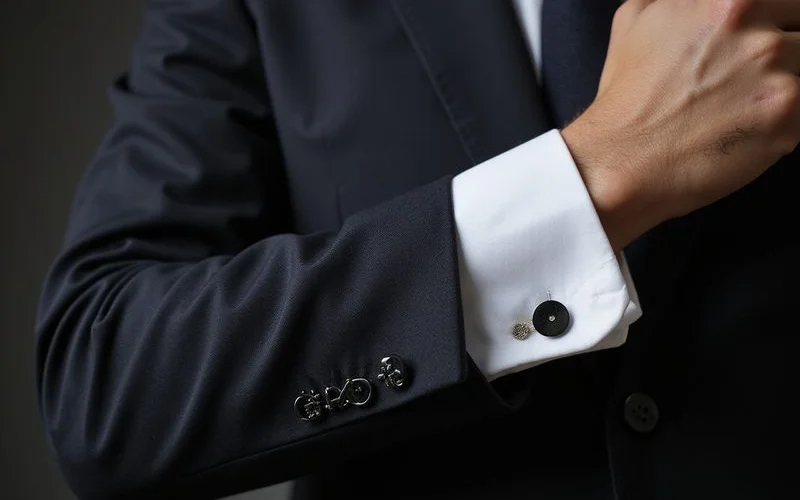
Length. With your arms hanging naturally, the sleeve should end at your wrist bone, where your hand meets your wrist. Under a jacket, about half an inch of cuff should remain visible.
Shrinkage factor. High-quality cotton shrinks. Account for about 1 to 2 cm of length loss over the first few washes.
Width. The sleeve should slide easily over your forearm without billowing. When you bend your arm, you should not see excessive bunching.
Armhole position. The armhole should sit close to your armpit, not drop down your arm. A high armhole improves both range of motion and the cleanness of the line. Off-the-rack shirts often use a dropped armhole, the so-called “flying squirrel” cut, which causes the shirt to untuck the moment you raise your hand. This is a particular problem for desk workers in PJ who sit through long meetings and presentations.
The Cuffs
Fit. Snug enough that the cuff cannot slide over your hand when unbuttoned, but loose enough to accommodate a watch and move freely on the wrist.
Watch clearance. If you wear a substantial timepiece, add an extra 1 to 2 cm to the cuff circumference of your watch wrist. This prevents the cuff from getting stuck above the watch face every time you move your arm.
Length. The cuff should cover your wrist bone. Under a jacket, the cuff should extend about half an inch beyond the jacket sleeve.
Style. Barrel cuffs (with buttons) are the standard for daily business wear. French cuffs (worn with cufflinks) are dressier and slightly longer, suited to formal events at venues like Hilton Petaling Jaya.
Common Fit Problems And What Causes Them
After three generations of fitting shirts in Petaling Jaya, we see the same five problems on repeat:
- Collar gap. The collar stands away from the back of the neck. Usually a band that is too large or a collar point cut wrong for the wearer’s neck shape
- Shoulder divots. Small dimples where the sleeve meets the shoulder, indicating a seam in the wrong position
- Billowing waist. Excess fabric pooling around the midsection, caused by insufficient waist suppression
- Pulling placket. The button line gapes between fastenings, especially when seated, meaning the chest or waist is too tight
- Sleeves that ride up. Caused by a low-cut armhole that off-the-rack patterns rely on to fit the most bodies
Why Custom Shirts Solve The Problem
Off-the-rack shirts are designed to fit as many bodies as possible, which means they fit almost no body well. A “size 16” assumes specific neck, sleeve, chest, waist, and length proportions, and if any of those numbers do not match your actual body, you are stuck with a compromise.
A custom shirt eliminates the compromise. We measure each variable individually and cut the shirt to follow your real proportions:
- Collar sized to the quarter-centimetre
- Sleeves cut to length, with adjustments for left and right arm differences
- Body tapered to your specific chest-to-waist drop
- Shoulder seams positioned exactly on your shoulder bone
- High armholes for movement and tropical comfort
Making The Investment
A custom shirt from Lanwin Tailor starts at around RM 580. That is more than a shopping mall shirt and less than you might expect. Look at the total cost of ownership rather than the sticker price. Buying an RM 250 shirt and paying for alterations to make it wearable often ends up costing nearly as much as starting with a custom shirt that fits properly from day one.
Many of our clients report that once they have experienced custom shirt fit, they cannot go back. The off-the-rack shirts already in their wardrobe suddenly look sloppy by comparison.
If you would like to feel what a properly fitted shirt is supposed to feel like in Petaling Jaya’s heat, book a consultation. We will measure, talk through cloth options, and show you how much better a shirt can fit when it is built specifically for you.
Mei Ling
Expert insights from the Lanwin Tailor team in Petaling Jaya.