Why Bespoke Suits Cost What They Do: An Honest Breakdown
A transparent look at what goes into the price of a bespoke suit at Lanwin Tailor's Petaling Jaya workshop, from cloth costs to 60+ hours of handwork.
When prospective clients first see our bespoke pricing, the natural reaction is a polite raised eyebrow. A starting price of around RM 5,500, climbing to RM 12,000 or more for premium commissions, sounds like a lot when shopping mall suits sit on display for RM 800. The gap is real, and clients deserve a real explanation rather than a vague appeal to “quality.”
We believe in transparency at Lanwin Tailor, partly because it is the right thing to do and partly because the people who actually commission bespoke suits are exactly the kind of professionals who can smell vagueness from a mile away. So here is exactly where the money goes, broken down by stage.
Step One: The Cloth
The cloth you choose is usually the largest variable in the final price. Through our partnership with Finch & Co. Bespoke Fabrics, we source directly from heritage British and Italian mills, including Holland & Sherry and Dormeuil. These are the same legendary producers that supply Savile Row.
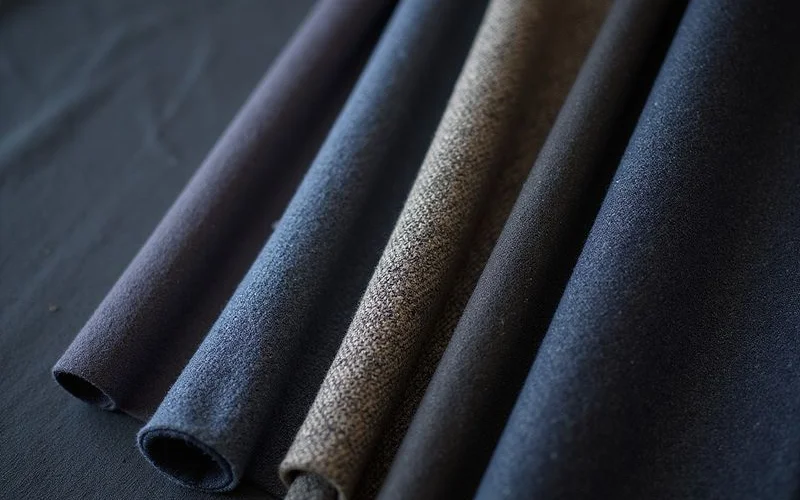
What makes these cloths different is not marketing. It is the supply chain. Premium suiting cloth comes from specific sheep herds raised in controlled climates, processed using techniques refined over generations to achieve a particular hand and drape. The cloth recovers its shape after a long day, drapes naturally over your specific frame, and ages slowly rather than tiredly.
For Petaling Jaya wear, we typically recommend high-twist Super 110s or 120s wools. Higher numbers like Super 150s or 180s feel beautiful but are more fragile and prone to wrinkling, which makes them a poor match for our humidity. Cloth costs scale upward when you move into finer weaves, cashmere blends, or limited-run collections.
At the workshop, cloth typically accounts for 20 to 30% of the total commission cost.
Step Two: The Pattern
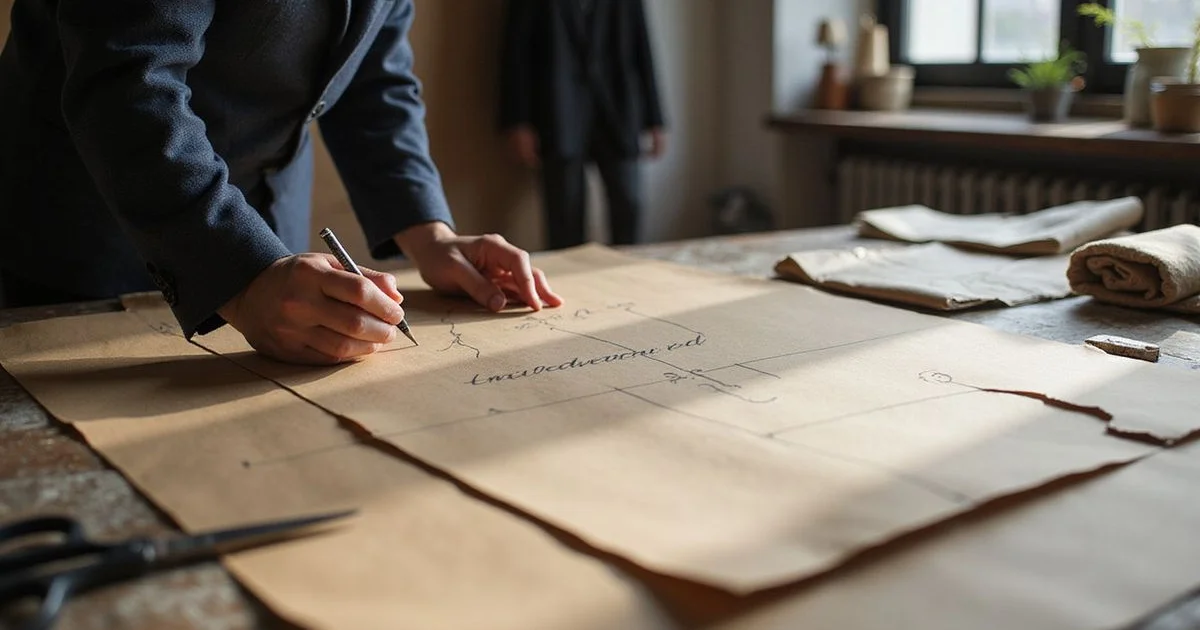
Every Lanwin Tailor commission begins with a unique paper pattern drafted from a blank sheet, not a template adjusted by software. Our head cutter Ahmad uses drafting techniques inherited from three generations of working in Petaling Jaya’s tailoring scene.
Creating this blueprint is where decades of experience pay off. Why does your right shoulder sit slightly lower than your left? How does your specific posture affect the way a jacket hangs when you are simply standing still? Where does the cloth naturally want to pool? A skilled cutter answers these questions intuitively and directs the cloth accordingly, instead of fighting the body for thirty hours of construction.
The drafting process takes one to two hours per commission. That hour represents decades of accumulated knowledge that simply does not transfer to a CAD program.
Step Three: The Cutting
With the pattern complete, fabric cutting begins. Each piece is cut by hand, with specific allowances for seams and for future adjustments as your body changes over the next decade.
Cutting is about more than precision. It is about understanding how the cloth’s grain will behave in the finished garment. We position pattern pieces to use the cloth efficiently while ensuring that stripes or checks align perfectly across every seam. A mistake at this stage destroys expensive cloth and forces a complete restart, which is why this step rests entirely with the most experienced hands in the workshop.
Step Four: The Construction
This is where the largest portion of the cost lives. A genuine artisan suit requires 60 to 80 hours of skilled handwork. That is not marketing language, it is the actual total of cutter, finisher, and fitter time logged across the commission.
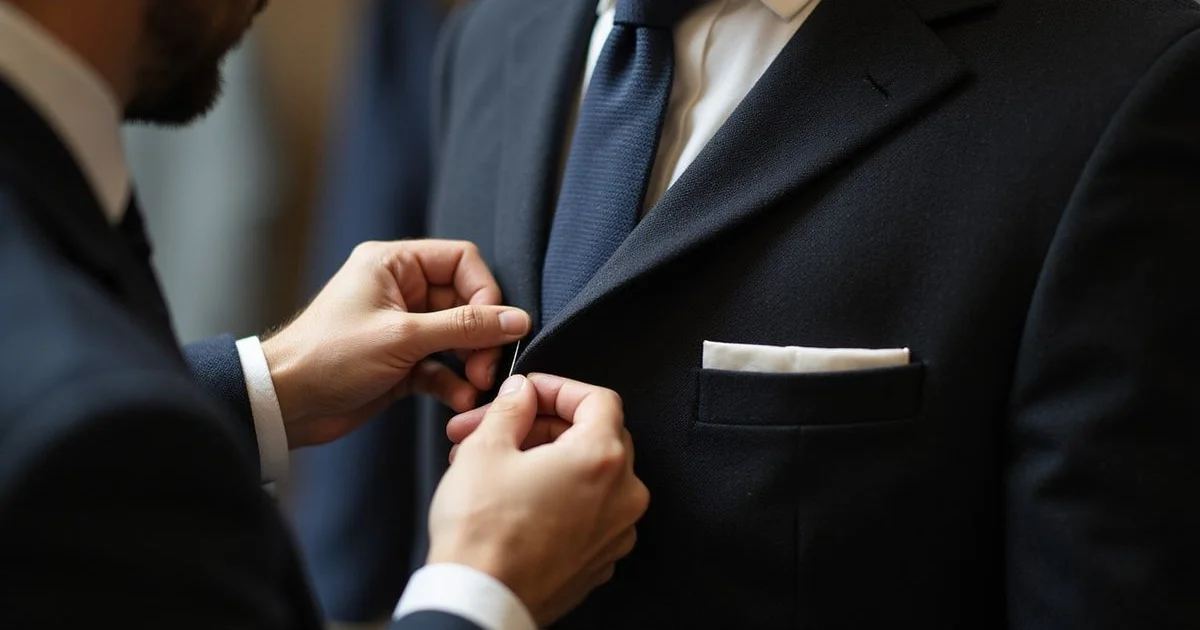
The canvas work. The canvas is the internal layer that gives a jacket its shape. Ahmad and our team hand-pad and hand-stitch this canvas, gradually building volume through the chest and lapel using thousands of small anchor stitches.
This canvas “floats” between the outer cloth and the lining, allowing the jacket to mould to your body over time. In Petaling Jaya’s climate, where body heat from your daily commute slowly shapes the cloth, this floating construction is a noticeable functional advantage. A glued chest piece simply cannot adapt the same way.
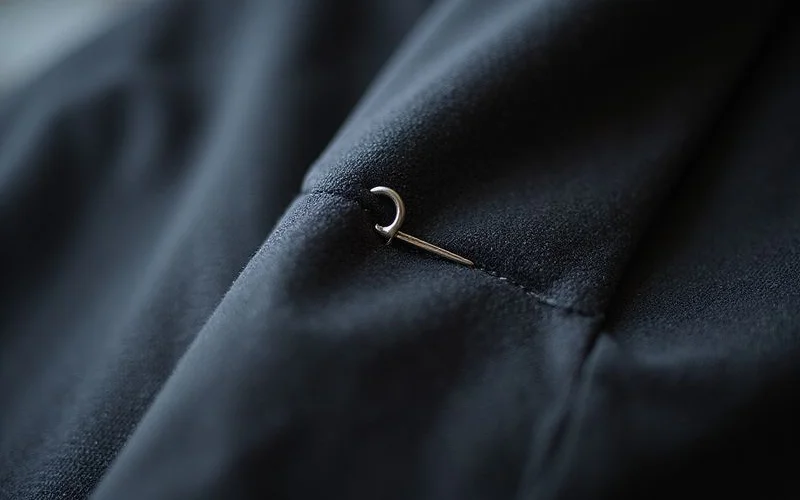
Hand-sewn details that define quality:
- Pick stitching along lapel edges, which prevents rolling and adds visible craft
- Floating canvas stitching, the thousands of internal anchor points
- Functional buttonholes, each one cut and sewn by hand with silk thread
A single hand-finished buttonhole takes 20 to 30 minutes to complete properly. Machine-made buttonholes take seconds but tend to fray or look flat, especially after a few rounds with a Petaling Jaya dry cleaner.
Canvas Construction vs Factory Fusing
| Feature | Hand-Canvased Suit | Factory-Fused Suit |
|---|---|---|
| Internal structure | Floating canvas of wool and horsehair | Glued synthetic interlining |
| Adaptability | Moulds to your body shape over time | Stays stiff and static |
| Breathability | Air flows through the layers | Glue blocks airflow |
| Realistic lifespan | 15 to 20+ years with care | 2 to 4 years before glue bubbles |
Step Five: The Fittings
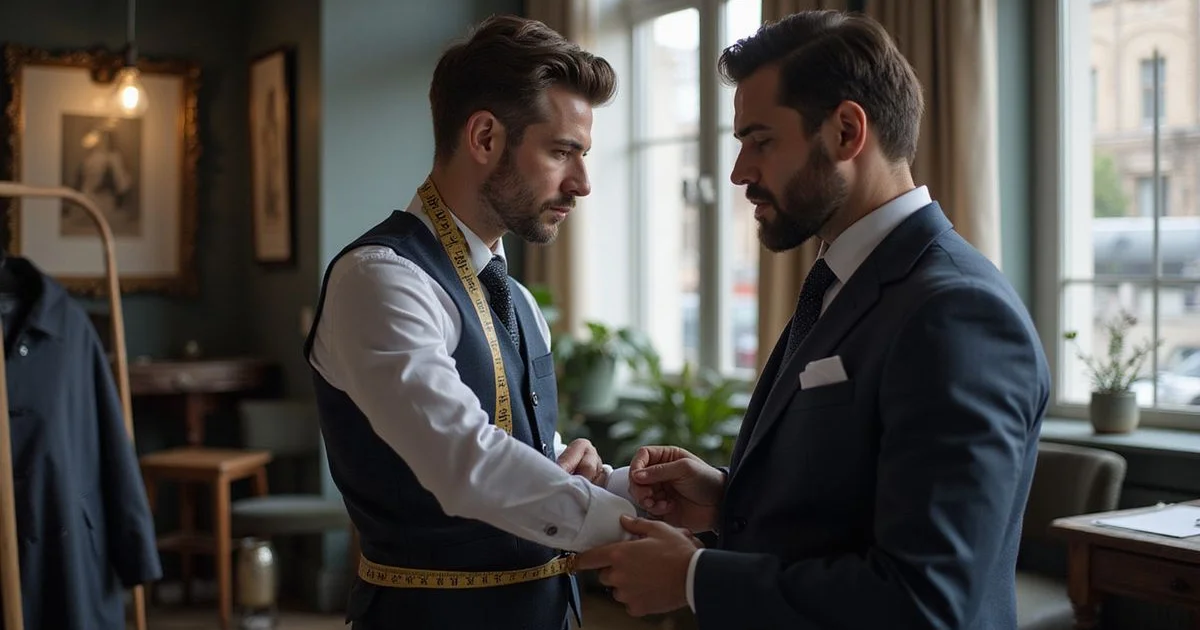
Unlike ready-to-wear or made-to-measure, bespoke involves multiple fittings that each take staff time and workshop space. At each stage, we refine the garment further.
- First fitting (the baste). The skeleton suit is tried on. We mark adjustments to shoulder slope, balance, and drape
- Second fitting (the forward). The actual cloth is now in play. We refine pitch, button stance, and any remaining drape issues
- Final fitting. A last check before hand finishing and delivery
Each of these appointments represents real time for both the client and our team. This is precisely why a bespoke commission fits in a way that ready-to-wear cannot replicate.
Step Six: The Workshop Itself
Behind every suit is the overhead of running a real workshop. We pay rent on our Petaling Jaya space, maintain specialised cutting equipment, and keep an archive of client patterns going back to 1978. We pay our team to work properly rather than rush to factory deadlines.
We do not outsource. Every stitch in a Lanwin Tailor suit is done in our local workshop, which means we control quality at every stage. It also means we carry the genuine costs of doing everything ourselves in a city where commercial rents and skilled labour have both risen significantly over the past decade.
The Math Of Mass Production
To understand bespoke pricing, look at what mass production sacrifices to hit its low price points.
A factory suit might use RM 120 of cloth. Cutting and assembly take only two or three hours of low-wage labour, often in another country. Fused interlining replaces hours of hand-padding. Machine buttonholes take seconds. The result is a functional garment for a fraction of the price.
But the result is also a fundamentally different product, made for an “average” body that does not exist. Factory suits use techniques optimised for speed rather than longevity. They are designed to fit some of the people some of the time, and to be replaced rather than maintained.
When you commission from us, you are not paying a premium for a brand label. You are paying for a garment designed and built for one specific body, with materials and methods that survive a long working life.
The Cost Per Wear Argument
A RM 7,500 bespoke commission seems expensive against a RM 1,200 mall suit. The honest comparison is in cost per wear, not initial price.
A well-made bespoke suit, properly cared for in our climate, lasts 15 to 20 years. We have clients in Petaling Jaya still wearing suits we made for them more than a decade ago. RM 7,500 spread across 15 years works out to about RM 500 per year, or roughly RM 10 per wearing if the suit comes out twice a week.
The mall suit, by contrast, will rarely last more than three years before the chest piece begins to bubble or the cloth wears at the elbows. RM 1,200 spread across two and a half years works out to about RM 480 per year, with the difference being that the bespoke suit looks better every year while the factory suit looks worse.
Other parts of the value proposition:
- Confidence. Off-the-rack jackets simply cannot fit like a suit built for your specific body
- Re-cuttability. Bespoke suits are built with seam allowances that allow them to be altered as your body changes. Most factory suits cannot survive significant alterations
- Pattern archive. Future commissions are faster and more accurate because we keep your unique pattern on file
Our Commitment To You
At Lanwin Tailor, our bespoke suits start around RM 5,500 and climb to RM 12,000+ depending on cloth selection. Every commission includes the initial consultation, pattern drafting, multiple fittings, and any necessary adjustments through to delivery.
There are no hidden charges. We tell you upfront what the commission will cost, and we hold to that number through the process.
If you have never experienced bespoke tailoring at this level, we would welcome the chance to walk you through what is possible in person. Start with a complimentary consultation at our Petaling Jaya workshop. We will show you cloth options, explain the construction differences in person, and answer any questions about timeline, fittings, and care.
The investment is real. So is what you get in return.
Louis Chua
Third-generation Master Tailor leading the Lanwin Tailor workshop in Petaling Jaya.