Suit Alterations After Weight Change: What's Actually Possible
Your body has changed, but you still love your suits. Here is what Petaling Jaya alterations can fix, what they cannot, and how to make the call.
You pull on your favourite suit for an important meeting in Section 13, and something is wrong. The jacket is hanging off the shoulders like a borrowed garment, or the trousers are cutting into your waist with every breath. The big project at the gym has paid off, or the past six months of long working dinners have caught up with you, and now your wardrobe no longer recognises your body.
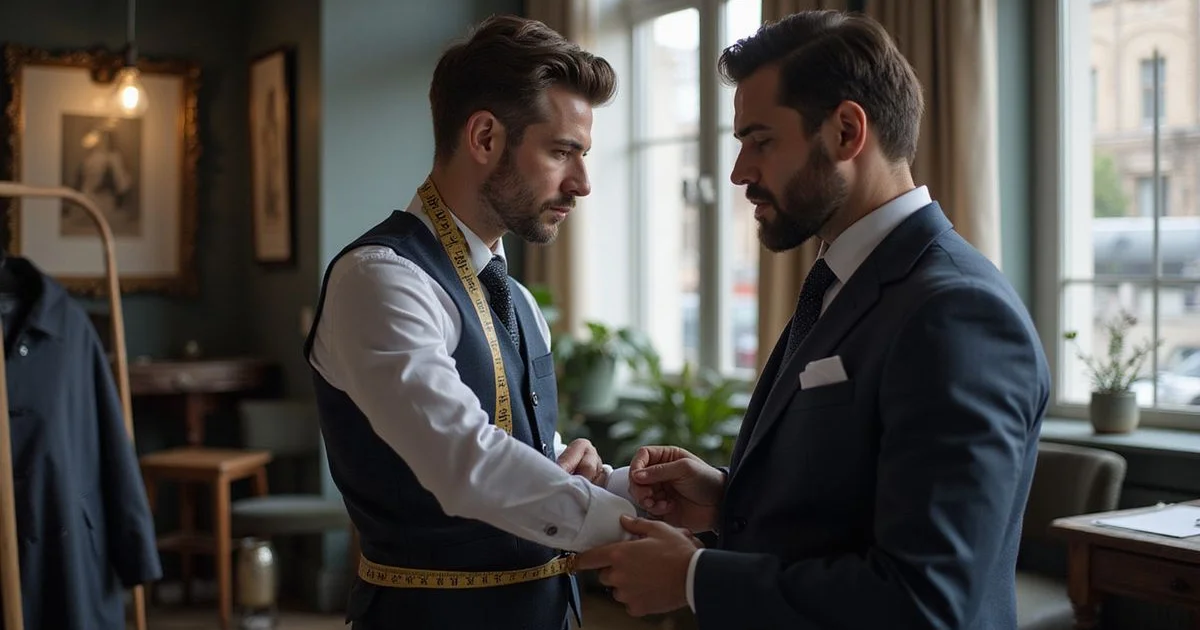
We see this every week at our Petaling Jaya cutting room, and the question is always the same: “Can you save this?”
Sometimes the answer is yes, with a clever alteration that returns the suit to better than new. Sometimes the answer is no, and we have to be honest about why. This post is the framework Lanwin Tailor uses to make that call.
Why The Pattern Cannot Always Follow The Body
A suit is built around an internal architecture of canvas, padding, and seam allowances. These structural elements were chosen for the body that originally walked into the cutting room. When that body changes significantly, you are not just adjusting cloth. You are asking the underlying architecture to do something it was not designed for.
Some of that architecture is flexible. Side seams, trouser waists, and trouser hems are usually built with future adjustments in mind. Other elements, such as the chest piece, the lapel roll, and the shoulder line, are essentially permanent features of the original commission. They cannot be moved meaningfully without rebuilding the jacket.
That distinction is the foundation of every honest alteration consultation.
Weight Loss: Taking Things In
If you have dropped a few kilos, you are in a much stronger position than someone who has gained them. Taking a garment in is almost always easier than letting it out, and the structural rules are kinder.
The Two-Inch Safe Zone For Jackets
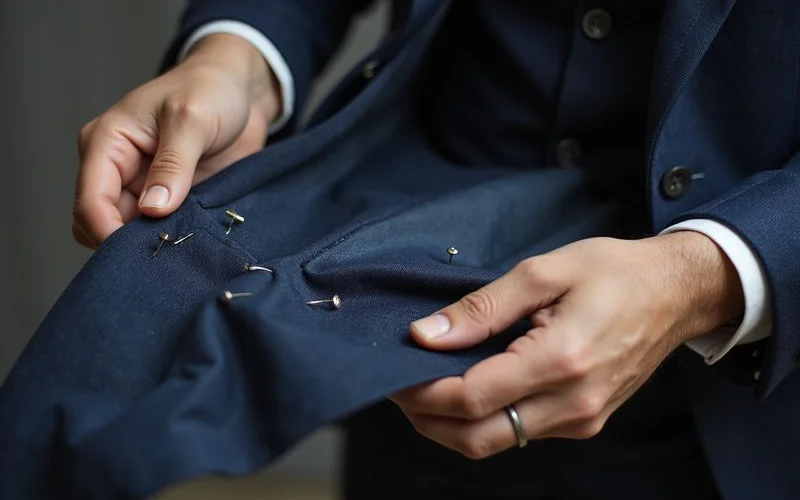
Most master tailors agree that 5 cm (about 2 inches) is the safe maximum for waist reduction on a jacket. Beyond that, the side pockets begin to migrate toward the back and the visual balance breaks. If you need more than 5 cm of reduction, the jacket should usually be replaced.
Trousers And Seat
Reducing the trouser waist by 4 to 5 cm at the rear centre seam is standard and safe. Reductions beyond 7 to 8 cm usually require recutting the entire trouser, which means removing the waistband and pockets. This is a labour-intensive job costing RM 200 to RM 350 in our workshop, and it is rarely worth it on a low-value garment.
Leg Tapering
If your legs have slimmed, we can taper the inseam to remove excess cloth. This works best when balanced against the hem opening. A heavy taper without a matching hem adjustment creates an awkward bell shape from the knee down.
Shirts
Custom or quality off-the-rack shirts can be darted at the side seams to eliminate the parachute billow at the waist. This is one of the highest-value alterations we offer, and it transforms the look of any tucked shirt.
Where The Limits Begin
Shoulder narrowing is technically possible but expensive and structurally risky. The cost in our workshop usually exceeds RM 350, and the visible result varies depending on the original jacket construction. We rarely recommend it on anything other than a high-value commission.
Jacket length is another sensitive area. Removing more than 2 cm shifts the button stance and pulls the side pockets too close to the hem.
Weight Gain: Letting Things Out
If you have added muscle or simply enjoyed too many late nights at PJ’s hotel buffets, the situation is trickier. Letting a suit out depends entirely on what the original maker left you.
Seam Allowances Are Everything
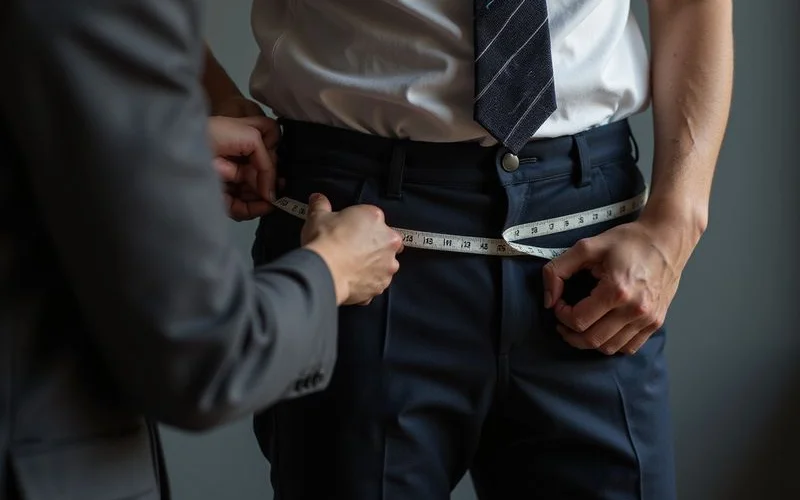
We open the lining to check what fabric is folded inside the seams. High-end Italian and British makers usually leave 1 to 2 cm of allowance at critical points. Mass-market brands often leave nothing at all. If the allowance is missing, expansion is impossible regardless of skill.
Trouser Waist Expansion
The back centre seam is your best hope for a trouser waist that has gone tight. Most quality trousers can release 2.5 to 4 cm here.
The Ghost Stitch Risk
Even when fabric is available, the original seam may have left a permanent shadow. Dark navy and black wools are particularly bad for this, and the ghost stitch becomes painfully visible in PJ’s bright sunlight when you walk to your car.
What Almost Never Works
- Major chest expansion. The chest piece is the heart of the jacket structure. It cannot be let out without rebuilding the entire upper jacket
- Shoulder expansion. Physically impossible. You cannot create cloth that does not exist
- Trouser expansion beyond 4 cm. The fabric will pull at the buttonhole and create a permanent X-crease across the front
Four Questions We Ask Before Any Alteration
When you bring us a suit after weight change, our consultation focuses on four key pillars.
1. How Much Did You Change?
Alterations are realistic for shifts of around 4 to 7 kg. Beyond 9 to 10 kg, your body geometry has usually changed too much for a standard alteration to fix completely.
2. Where Did The Change Happen?
Weight gained around the midsection is often fixable. Weight gained in the neck, shoulders, or thighs is far harder, because those areas have complex structural points that resist alteration.
3. What Construction Tier Is The Suit?
A fully canvased suit (typically RM 5,000 and up) is built to be altered. Fused or glued suits in the RM 1,200 to RM 2,000 range often pucker or peel when major structural seams are moved. Knowing the tier of the original garment is critical to the decision.
4. What Condition Is The Cloth In?
We always perform a “stress test” by holding the trousers up to a strong light. If the cloth in the seat or inner thighs is thinning or shiny, investing in alterations is throwing money after a garment that is already on its way out.
Realistic Expectations By Scenario
Here is how the numbers stack up in our workshop, based on current Petaling Jaya pricing.
Best case. You have a high-quality wool suit and you need the waist taken in 4 cm.
- Result: Looks brand new
- Cost: RM 180 to RM 280
Moderate case. Jacket sides tapered and trouser waist let out as far as the seam allows.
- Result: A wearable suit that looks 90% perfect
- Cost: RM 350 to RM 550
Challenging case. Shoulders narrowed or major length changes.
- Result: A jacket that fits technically but may look slightly off-balance
- Cost: RM 600 and up
Not feasible. The change is too dramatic, or ghost stitch lines are visible.
- Result: A garment you will never feel confident wearing in front of clients
Why Bespoke Suits Survive Body Change Better
This is where the long-term value of bespoke commissions reveals itself.
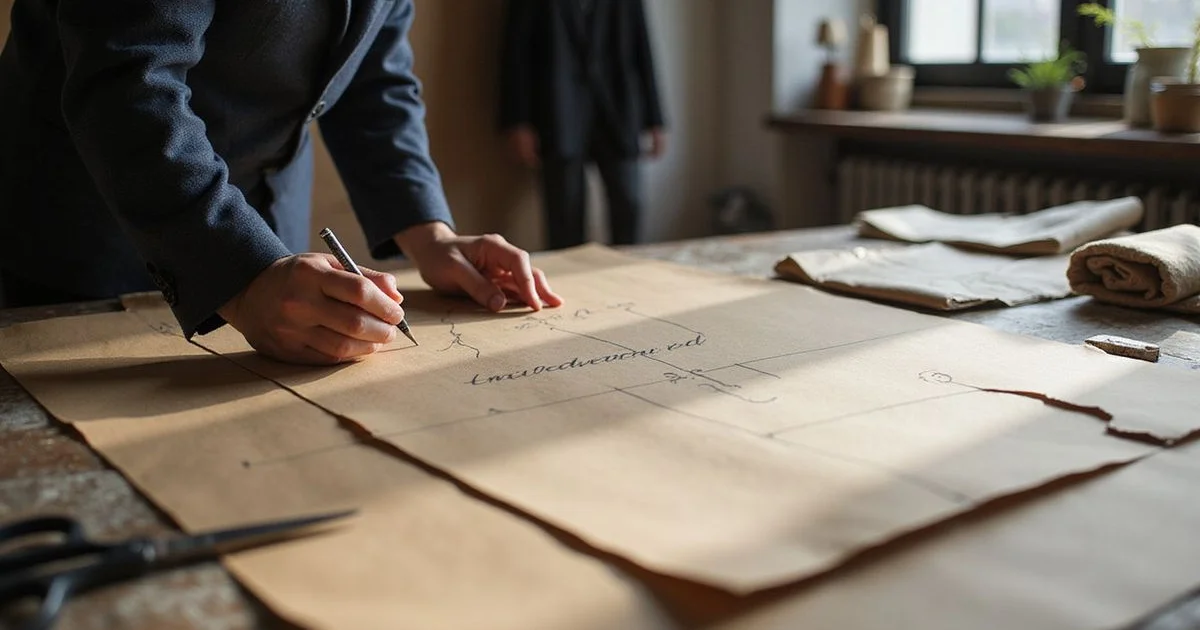
Patterns on file. If we made the original suit, your unique paper pattern is in our archive. We can re-cut it for new measurements, and in some cases we can re-make sections of the suit if we kept the leftover cloth.
Generous inlays. Bespoke suits are built with extra fabric at critical seams as a deliberate practice. This anticipates the body changing over the next ten to twenty years. Mass-market suits cut every centimetre to save cost, leaving nothing for the future.
Resilient cloth. Premium high-twist worsteds steam and press beautifully, hiding the signs of alteration far better than synthetic blends.
An ongoing relationship. We track your fit history. Knowing exactly how your posture and weight have shifted over time allows us to make micro-adjustments that a one-time tailor would miss.
When Replacement Beats Alteration
Sometimes the smartest financial choice is to retire the garment and start fresh.
| Alteration | Cost (PJ) | Verdict |
|---|---|---|
| Simple hem or waist | RM 80 to RM 180 | Keep. High value |
| Taper jacket sides | RM 220 to RM 400 | Keep. Transforms the look |
| Recut trousers | RM 350 to RM 550 | Review. Only on suits worth more than RM 3,500 |
| Shoulder or collar work | RM 600+ | Consider replacement instead |
If alterations would exceed 50% of the garment’s current value: Do the maths. Spending RM 600 to alter a suit you bought three years ago for RM 1,500 is rarely a good investment.
If the result will not satisfy you: Confidence is the entire point of a suit. If you spend the day adjusting a tight seam or tugging at a hem, the alteration has failed.
If your weight is still moving: We strongly advise waiting until you have held a stable weight for 3 months. Altering a suit twice weakens the cloth integrity with every stitch removal.
What Our Process Looks Like
Bring your suits to our Petaling Jaya workshop for an alterations audit. The process follows five steps.
- Interior inspection. We open the lining to verify available seam allowances
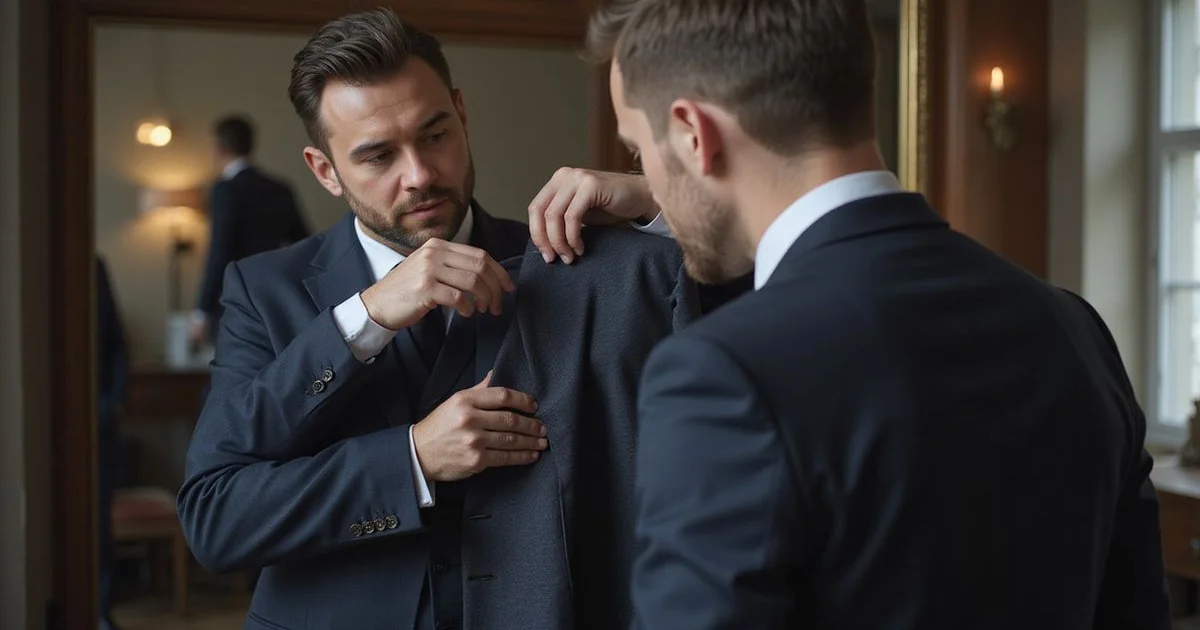
- Fit analysis. You try the suit on so we can pin the problem areas in real time
- Feasibility check. We discuss the structural limits openly, including any ghost stitch risks
- Transparent pricing. You get a line-item quote before we cut a single thread
- Honest verdict. If the suit belongs in the donation bin, we will say so
There is no obligation to proceed. Our goal is to make sure you look impeccable, whether that means rescuing an old favourite or helping you start fresh.
Schedule your consultation and let us see what can actually be done with the suits you already own.
Ahmad Sulaiman
Expert insights from the Lanwin Tailor team in Petaling Jaya.